Introduction: The Hidden Cost Problem Every Startup Faces
You launched your startup with a lean budget and a tight team. You signed up for a project management tool here, a communication platform there, a CRM, a design tool, a marketing automation suite — and before you knew it, you were paying for 30+ SaaS subscriptions every month.
Sound familiar?
This is the SaaS sprawl problem, and it is quietly draining the financial resources of startups worldwide. Studies show that companies waste an average of 30% of their SaaS spend on unused, underutilized, or duplicate software subscriptions. For early-stage startups where every dollar matters, this is a critical issue that demands an immediate solution.
Enter SaaS Spend Management Software — the modern solution that gives startups complete visibility and control over every software subscription, license, and vendor relationship in their tech stack.
In this comprehensive guide, we cover everything startups need to know about SaaS spend management — from what it is and why it matters, to the best tools available in 2025 and how to implement a winning SaaS management strategy from day one.
What Is SaaS Spend Management Software?
SaaS Spend Management Software is a specialized platform that helps businesses discover, track, optimize, and control all of their software-as-a-service subscriptions and related expenditures from a single centralized dashboard.
Unlike traditional expense management tools that focus on travel and employee reimbursements, SaaS spend management platforms are specifically designed to handle the complexity of modern software portfolios — including:
- Automatic discovery of all active SaaS subscriptions
- Real-time spend tracking across tools and departments
- License utilization and user activity monitoring
- Contract and renewal date management
- Duplicate app detection and elimination
- Vendor negotiation intelligence
- Budget forecasting and spend optimization
- Security and compliance oversight
For startups managing rapid growth and limited budgets, these capabilities are not just convenient — they are financially essential.
Why Startups Specifically Need SaaS Spend Management
Startups occupy a unique position in the business world. They move fast, scale quickly, and often add software tools reactively — solving immediate problems without a structured procurement process. This creates several expensive challenges:
1. Uncontrolled SaaS Sprawl
As team members across different departments independently sign up for tools using company credit cards or personal cards for reimbursement, the number of active subscriptions grows rapidly. Without visibility, no one knows how many tools the company is actually paying for — or whether those tools are even being used.
2. Budget Overruns from Forgotten Subscriptions
Free trials automatically convert to paid plans. Annual subscriptions renew without notification. Seats purchased for former employees continue billing. These “invisible” costs add up quickly and regularly blow through startup budgets.
3. Security and Compliance Risks
Every unauthorized SaaS application that employees adopt without IT approval is a potential security vulnerability. For startups handling sensitive customer data, unknown applications represent serious compliance risks — particularly under frameworks like SOC 2, ISO 27001, and GDPR.
4. No Negotiating Power Without Data
When renewal time comes around, startups without spend management data are negotiating blind. They don’t know their actual usage rates, what comparable companies pay, or when the best time to renegotiate is — leading to consistently overpaying for software.
5. Wasted Investor Capital
For VC-backed startups, every dollar of capital should drive growth. Paying for 15 seats of a project management tool when only 6 are being used is not growth — it is waste. Investors increasingly scrutinize SaaS spend efficiency as a metric of financial discipline.
Core Features to Look for in a SaaS Spend Management Platform
When evaluating SaaS spend management software for your startup, these are the essential features that deliver the highest return:
Automated SaaS Discovery
The best platforms automatically discover every SaaS application your team is using — even the ones that finance does not know about — by connecting to your SSO provider, financial systems, and browser activity. Manual spreadsheet audits miss shadow IT; automated discovery catches everything.
Centralized Spend Dashboard
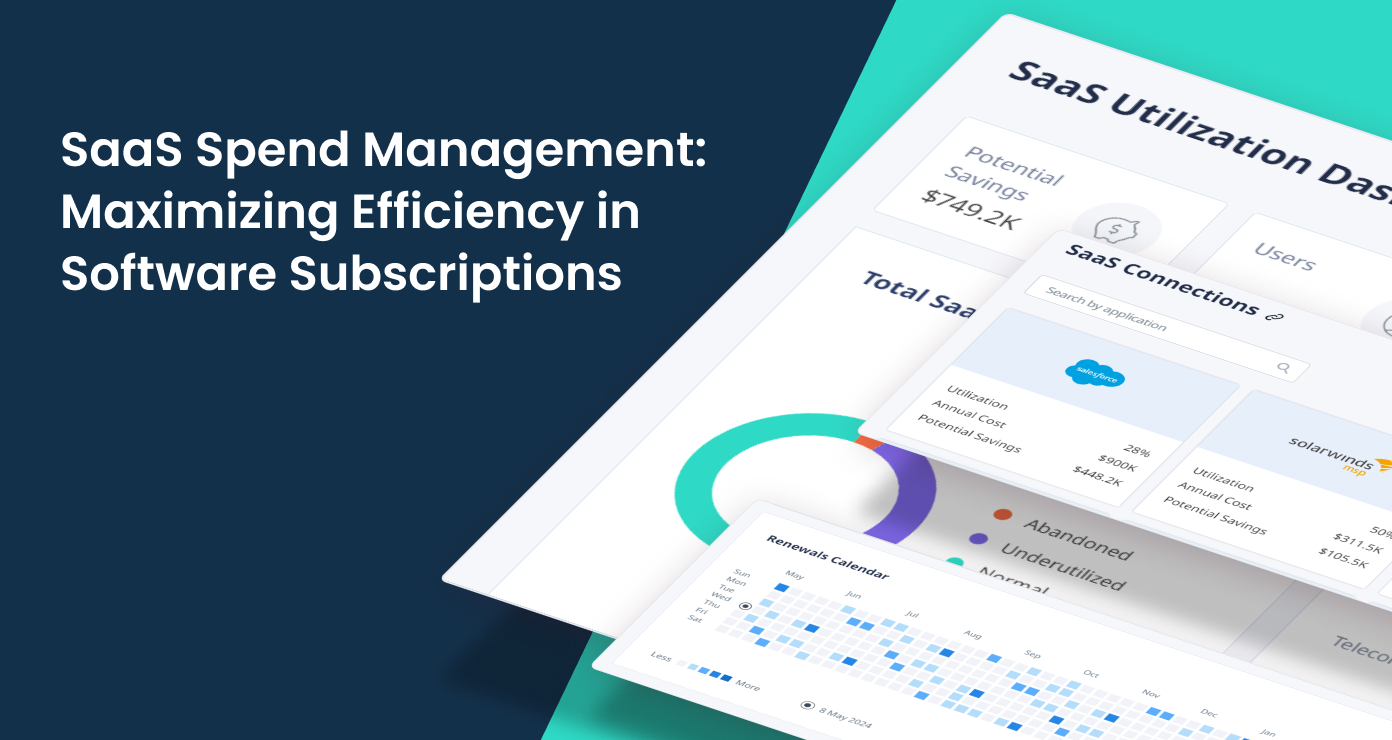
A single dashboard showing total monthly and annual SaaS spend, broken down by department, category, and vendor, is the foundation of effective spend management. Look for platforms that update this dashboard in real time.
License and Utilization Tracking
Knowing how many licenses you are paying for is only half the equation. The real value comes from knowing how many of those licenses are actively being used. Utilization data lets you right-size subscriptions — cutting seats where activity is low and adding them where demand is high.
Renewal and Contract Management
Missing a renewal deadline can lock you into another full year of a product you no longer need. Renewal management features send automated alerts weeks or months in advance, giving your team time to evaluate, negotiate, or cancel before auto-renewal kicks in.
Vendor Benchmarking and Negotiation Intelligence
Top-tier SaaS spend management platforms provide benchmarking data showing what similar companies pay for the same tools. This intelligence gives startups real leverage in vendor negotiations — often leading to 15–30% cost reductions on major subscriptions.
Approval Workflows and Procurement Controls
Preventing unauthorized SaaS purchases before they happen is far more cost-effective than discovering them after the fact. Approval workflow features allow startups to set up lightweight procurement processes — ensuring all new software purchases go through a quick review before payment.
Integration with Financial Systems
Look for platforms that integrate with your accounting software (QuickBooks, Xero, NetSuite), expense management tools (Expensify, Concur), and corporate card providers to automatically capture and categorize SaaS spend without manual reconciliation.
Top SaaS Spend Management Software for Startups in 2025
1. Ramp
Ramp has emerged as one of the most startup-friendly SaaS spend management platforms available. Built around its corporate card product, Ramp automatically tracks all software spending across the business, provides real-time spend alerts, and delivers AI-powered savings recommendations.
Key features: Automated spend tracking, bill pay, vendor negotiation concierge, savings insights, accounting integrations
Best for: Seed to Series B startups
Pricing: Free for core features; paid plans from $15/user/month
Standout advantage: Ramp’s AI engine proactively identifies duplicate subscriptions and negotiates on your behalf — users report average savings of $250,000+ in the first year.
2. Spendesk
Spendesk is a comprehensive spend management platform that combines SaaS tracking, corporate cards, invoice management, and expense reports in one unified tool. Its SaaS management module provides full visibility into software subscriptions with usage analytics and renewal alerts.
Key features: Multi-currency support, team spending limits, SaaS tracker, invoice automation
Best for: European startups and globally distributed teams
Pricing: Custom pricing based on team size
Standout advantage: Excellent for internationally distributed startup teams with multi-currency expense needs.
3. Torii
Torii is a dedicated SaaS management platform purpose-built for IT and finance teams at growing companies. It automatically discovers all SaaS applications in use, maps them to employees and departments, tracks spend and utilization, and manages the entire SaaS lifecycle from procurement to offboarding.
Key features: Shadow IT discovery, automated offboarding workflows, app catalog, spend optimization recommendations
Best for: Startups with 50+ employees and active IT teams
Pricing: Starting from $5/employee/month
Standout advantage: The most comprehensive SaaS discovery engine available — catches shadow IT that other platforms miss.
4. Zluri
Zluri is an AI-powered SaaS management platform that focuses heavily on license optimization and employee lifecycle management. Its automation capabilities allow startups to automatically provision and deprovision software access when employees join or leave — eliminating orphaned licenses and reducing security risk.
Key features: AI-driven spend optimization, automated user lifecycle, renewal management, vendor intelligence
Best for: Fast-growing startups with high employee turnover or frequent hiring cycles
Pricing: Custom pricing based on number of apps and employees
Standout advantage: Automated onboarding/offboarding workflows save significant IT time and eliminate security gaps from lingering access.
5. Airbase
Airbase is a full spend management platform that handles SaaS subscriptions alongside AP automation, corporate cards, and employee expense reimbursements. Its pre-approval workflow engine makes it particularly strong for startups building financial controls ahead of a Series B or C raise.
Key features: Pre-purchase approvals, multi-entity support, real-time spend visibility, ERP integrations
Best for: Series A+ startups preparing for audit-readiness or fundraising
Pricing: Custom pricing
Standout advantage: The strongest approval workflow system in the category — ideal for startups building investor-grade financial controls.
6. Cledara
Cledara is a SaaS subscription management platform built specifically for startups and small businesses. It provides a dedicated virtual card for each SaaS subscription, making it extremely easy to track, control, and cancel individual software tools with a single click.
Key features: Per-subscription virtual cards, one-click cancellation, spend forecasting, team permission controls
Best for: Early-stage startups (pre-Series A) wanting a simple, lightweight solution
Pricing: From $99/month
Standout advantage: The virtual card per subscription model gives unmatched granular control — cancel any subscription instantly without contacting the vendor.
How to Build a SaaS Spend Management Strategy for Your Startup
Selecting the right software is only the first step. The most successful startups pair their SaaS management platform with a structured strategy:
Step 1: Conduct a Full SaaS Audit
Before implementing any tool, run a comprehensive audit of every subscription your company currently pays for. Pull data from credit card statements, bank accounts, and ask every department head to list the tools their team uses. This baseline is essential.
Step 2: Assign SaaS Ownership
Every software tool in your stack should have a designated owner — a specific person responsible for evaluating its value, managing the vendor relationship, and making renewal decisions. Without clear ownership, tools get renewed by default without any evaluation.
Step 3: Establish a Procurement Policy
Create a lightweight SaaS procurement policy that defines: who can approve new software purchases, what spending threshold requires management approval, and what security review process new tools must pass. Even a one-page policy dramatically reduces unauthorized spending.
Step 4: Implement Usage Reviews Quarterly
Schedule quarterly SaaS stack reviews where you analyze utilization data from your spend management platform, identify underused tools, and make cut or consolidate decisions. Most startups find they can eliminate 20–30% of their software spending in the first review.
Step 5: Negotiate Strategically at Renewal Time
Armed with utilization data and market benchmarking from your SaaS management platform, approach every major renewal as a negotiation. Common startup negotiation wins include: multi-year discounts (15–25% off), additional seats at no extra cost, and premium features unlocked at base pricing.
Step 6: Automate Offboarding
When an employee leaves your company, their software access should be revoked immediately. Automate this process through your SaaS management platform to prevent security risks and eliminate the cost of paying for licenses that inactive former employees still hold.
The ROI of SaaS Spend Management for Startups
The financial return on investment from implementing SaaS spend management is consistently impressive. Here is what startups typically experience:
Average SaaS cost reduction: 25–35% in the first 12 months
Time saved on renewal management: 10–15 hours per month for finance teams
Security incidents prevented: Significant reduction in shadow IT related breaches
Audit preparation time: Reduced by 60–80% when financial records are centralized
Fundraising readiness: Investors respond positively to startups that demonstrate financial discipline through organized SaaS spend data
For a startup spending $20,000 per month on SaaS tools, a 30% reduction represents $72,000 in annual savings — far exceeding the cost of any spend management platform.
Common Mistakes Startups Make With SaaS Spending
Even with the best intentions, startups frequently make these costly mistakes:
Relying on spreadsheets: Manual tracking is always incomplete and always out of date. By the time you update the spreadsheet, three new subscriptions have been added.
Ignoring free trial conversions: Free trials are designed to convert. Without an automated alert system, these conversions happen invisibly and accumulate quickly.
Paying for legacy tools: As startups scale, tools that worked at 10 employees often get replaced — but the old subscriptions keep billing. Conducting regular stack rationalization prevents paying for tools that no one uses anymore.
Overlooking annual plan auto-renewals: Monthly subscriptions are easy to cancel. Annual plans that auto-renew are where the real waste happens — especially for tools where the team has moved on to alternatives.
Not tracking per-seat vs. per-user pricing: Many SaaS tools bill per user. As headcount grows, these costs scale rapidly and without any visibility — until the invoice arrives.
Future Trends in SaaS Spend Management for 2025 and Beyond
The SaaS spend management category is evolving rapidly. Here are the most important trends shaping its future:
AI-Powered Negotiation: Next-generation platforms are using AI to automatically negotiate pricing, flag overcharges, and identify contract terms that could be improved — without requiring any human involvement.
Unified Spend Intelligence: Leading platforms are moving beyond SaaS tracking to provide unified spend intelligence that covers all categories of business spending — creating a complete financial operating system for startups.
Embedded Security and Compliance: SaaS management platforms are increasingly building in security scoring for each application, automatically flagging tools that do not meet SOC 2, GDPR, or ISO 27001 requirements.
Predictive Budget Forecasting: AI-driven forecasting models that predict future SaaS spend based on hiring plans, usage trends, and contract terms are becoming standard features in enterprise-grade platforms.
FinOps Integration: The convergence of SaaS spend management with cloud cost management (AWS, GCP, Azure) is creating comprehensive FinOps platforms that give startups full visibility into all technology spending in a single view.
Conclusion: Take Control of Your SaaS Spending Before It Controls You
For startups, SaaS spending is one of the fastest-growing and least-controlled expense categories. The combination of rapid team growth, decentralized purchasing, and subscription fatigue creates a perfect storm of financial waste that compounds every month.
SaaS Spend Management Software gives startups the visibility, control, and intelligence needed to turn their software portfolio from a cost center into a strategic, optimized asset.
The right platform — whether it is Ramp for AI-powered savings, Torii for deep IT visibility, or Cledara for early-stage simplicity — pays for itself multiple times over in its first year of deployment.
The startups that build disciplined SaaS management practices early are the ones that arrive at their Series A, B, and C fundraises with cleaner books, stronger unit economics, and a financial discipline story that resonates powerfully with investors.
Do not wait until SaaS sprawl becomes a crisis. Implement a spend management solution today and transform how your startup manages one of its most significant operational expenses.